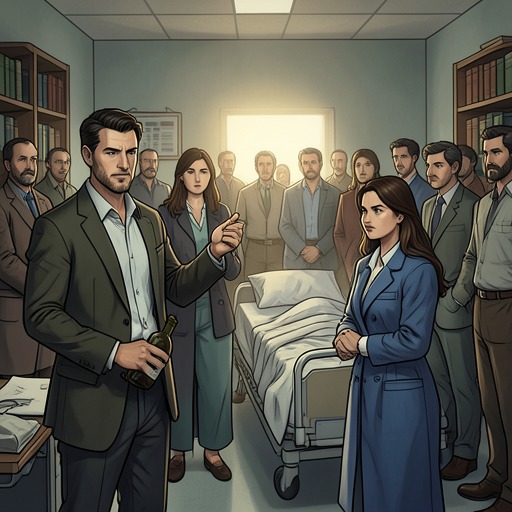
Ron Cummings
The TommyknockersRon Cummings is a wealthy poet whose easy access to money and almost constant drinking make him a consequential companion in Jim Gardener’s relapse. He invites Gardener to drink in Boston, and, later, his quick reading of a party’s mood keeps Gardener’s growing anger from taking over the room—though not for long.
Identity and Background
Cummings is described as a serious poet from a family whose textile wealth stretches back roughly nine hundred years and whose holdings include most of southern New Hampshire. As the second son, he is free to pursue poetry rather than the family business; his elder brother is not interested in textiles. Cummings often boasts that money is practically falling out of his backside and calls himself his own Medici. The narration also notes the distance between that public confidence and Gardener’s limited knowledge of him: Cummings does not know about Gardener’s struggle with alcohol or the past incident in which Gardener nearly killed his wife while drunk.
Physically, Cummings is portrayed as narrow and gaunt, with a face likened to that of someone with tuberculosis. Gardener has never seen him eat more than beer nuts and Goldfish crackers. These details mark him as a familiar, sharply drawn presence in the poetry scene, but they do not make him merely a foil: his seriousness as a poet coexists with his sustained appetite for drinking.
The Invitation and Gardener’s Relapse
The New England Poetry Caravan pays its poets in cash, offering two hundred dollars at the start of the tour and another two hundred at its end. Against that professional backdrop, Cummings appears at Gardener’s hotel while, far away, Bobbi Anderson and Peter are returning from a veterinary visit. He proposes going to the hotel bar for a drink, then cheerfully escalates the suggestion to getting thoroughly drunk.
Gardener accepts. He later reflects that a more tactful invitation might have left him better able to resist, but Cummings’s blunt proposal finds him at a vulnerable moment: on the morning of June 26, Gardener wants to drink, even though he knows that his recovery cannot be divided into a harmless middle ground between drinking and not drinking. At the bar, he raises a Jack Daniel’s and tells himself he can stop whenever he chooses. The scene establishes Cummings not as the cause of Gardener’s addiction, but as the immediate social prompt that helps turn a craving into a relapse.
After they have had several drinks, Cummings suggests finding entertainment more lively than the hotel’s piped-in music. The account presents the suggestion as another step in the evening’s drift toward excess. It does not give Cummings the same knowledge of Gardener’s history that the reader has, sharpening the gap between the companion’s casual invitation and its serious consequences.
At Arberg’s Party
At Arberg’s party, Gardener spends time in the living room among younger guests whose conversation is lively and intelligent. His thoughts turn, as they often do when he is drunk, to nuclear weapons and his urge to warn others about them. Cummings enters the parlor visibly drunk but still alert to the room’s mood. He deftly steers the conversation back to poetry before Gardener can make much of his warning.
Gardener is both relieved and angry. Cummings’s intervention helps him avoid trouble for a time, but Gardener experiences the redirection as the denial of an outlet for his fixation. The reprieve is temporary: when Cummings begins discussing the Beat poets with his usual cutting wit, Gardener returns to the dining room to get another drink. Cummings has checked one escalation without recognizing, or resolving, the deeper crisis driving it.
Significance and Limits of His Role
Cummings’s role in Gardener’s story is defined by this uneasy mixture of companionship, temptation, and inadvertent restraint. His invitation coincides with Gardener’s decision to drink, while his social instinct later diverts Gardener from a volatile subject at a party. Neither action makes Cummings responsible for Gardener’s condition; together, however, they show how relapse can unfold through ordinary social occasions, even among people who lack the knowledge needed to understand one another’s vulnerabilities.
The contrast is pointed: Cummings can afford to drink almost constantly and continue writing poetry, while Gardener’s drinking carries a history of blackout, shame, and severe personal consequences. Cummings does not know that history. His apparent ease therefore emphasizes the unequal meaning the same evening can have for two companions, and his brief success at redirecting Gardener offers no lasting protection against the next drink.